

The pathless path revisited.
On permission to do the opposite of what “people like me” do.

Welcome to issue #051 of Unsubscribe. Each week, I send one essay to help you step off the default path and build a life you love, supported by work you enjoy.
Paul Millerd’s new hardcover edition of The Pathless Path unexpectedly arrived on my front steps a few days ago.
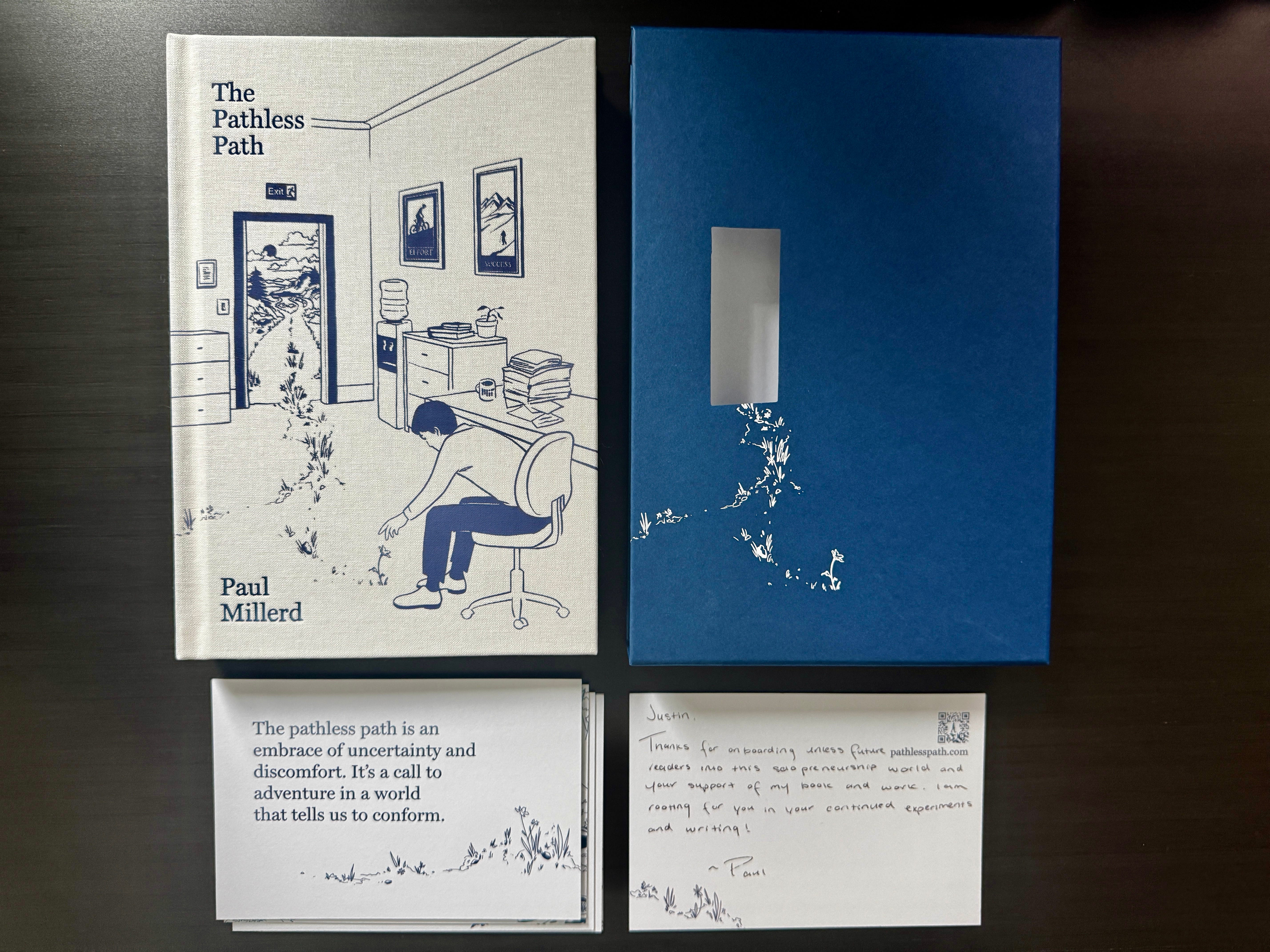
As I opened up the package, the first thing that hit me was how absolutely beautiful the book is. It’s more like a piece of art. It’s the kind of thing you want to pick up just to feel the weight of it in your hands.
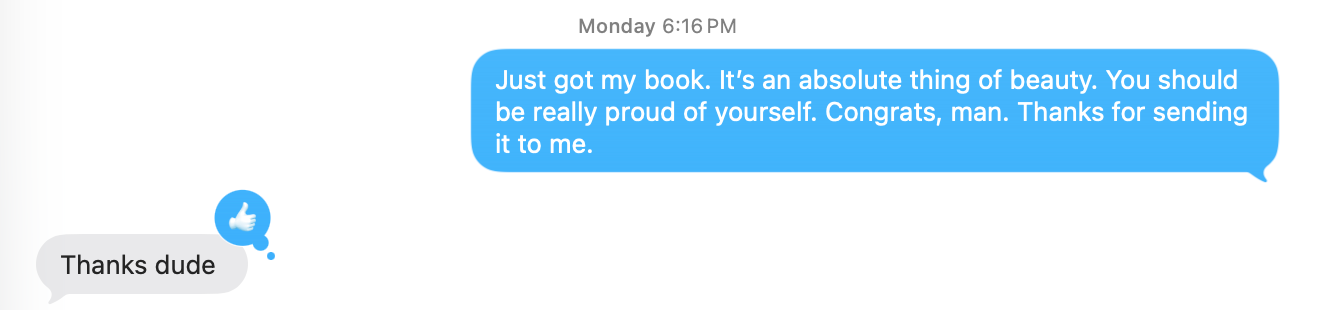
I texted Paul and immediately let him know my thoughts:
I opened the book and happened to randomly land on page 45, the beginning of Chapter 3, called “Work, Work, Work.”
Within about ten minutes, I remembered exactly why Paul’s book keeps pulling me back when so many other business books end up unread on my shelf.
Most business books tell you what to do. The Pathless Path gives you permission to stop doing what you thought you had to do.
And that difference is exactly why it’s been so impactful to me.
I first read Paul’s book back in January of 2024, after closing out a year where I hit an all-time revenue high of multiple seven figures in my business.
I should have felt like I was winning, but instead I felt this intense pressure, the weight of my own expectations, and a nagging sense that I was supposed to want more and push even faster.
To fulfill those feelings, I began exploring the possibility of signing a book deal. I got into deep talks with a well-known non-fiction publisher, and off to the races we went.
As the pace of the conversation quickened, I thought: this is the exact kind of thing that’s supposed to be the next logical step for someone like me.
But every time I sat down to think about actually writing it, I felt sick. I’d open my laptop, stare at a blank page, and my mind would start spinning. Not because I didn’t want to write the book. Because I knew what would happen if I did.
I’d cross over into complete pressure cooker territory. The book would need to sell, and I’d need to promote it. I’d need to build a business model around it. I’d have to do the PR circuit, the book signings, and the bookstore tours. And suddenly, my simple, low-cost, frictionless, 100% organic business would be turned into a bigger and more complex machine.
The problem was, I felt like if I said no, I’d be considered a failure. Like I was giving up on something I was supposed to want. Like I would be disappointing my family, all of whom are big readers, and were thrilled to hear I was even considering it.
I’d actually been wrestling with this tension for months. In July 2023, I attempted to express the feeling in a quasi-diary entry article titled, “When is enough, enough?” which questioned whether constant growth was even the point. And the book deal felt like exactly the kind of growth-for-growth’s-sake move I’d written about avoiding. But knowing something is wrong for you and having permission to actually say no are two different things.
That’s when I picked up Paul’s book. And it gave me permission to say no.
I’ve started saying no to a lot of other things as well.
I decided to forego the traditional playbook that online educators like me use. I didn’t hire a team or build complex funnels or even run ads. I didn’t follow any of the playbooks that people with businesses my size are supposed to follow. Instead, I kept my products low-cost and the buying experience frictionless. I kept growing organically, making content, and experimenting rather than following best practices.
And it worked. My audience grew to over 1.5 million, my newsletter reached 175,000 subscribers with a 61% open rate, and I continued doubling my revenue.
But more importantly, I got to keep my business small (just my wife and me) and work on something we actually enjoy doing.
As I skimmed further along in the book, I hit a line that really stuck out to me:
We are convinced that the only way forward is the path we’ve been on or what we’ve seen people like us do.
After reading that, I realized something. I’d been working to do the opposite of what “people like me” do, following Paul’s advice without even noticing.
Over a year after reading Paul’s book, I launched this Substack. I have no expectation of revenue, and I’m not interested in talking about business strategy and tactics.
I launched it because I wanted to write shorter, more personal essays that feed my creative spirit. I want to write about things that light me up, no matter what the topic.
The newsletter you’re reading right now is what redirected ambition looks like. It took me over a year to get here, but Paul’s book planted the seed.
I never signed the book deal. I didn’t hire a team. I didn’t build any funnels or ever run ads. I probably never will.
And I ended up with more revenue, more freedom, and more creative energy than I would have had if I’d followed the script that “people like me” were following.
Paul and I talked about a lot of this stuff on his podcast last year. If you want to hear more about how I’m trying to embrace creativity, we dig into it around the 32-minute mark:
If you’re wrestling with what you’re “supposed” to want in your business, go read The Pathless Path. The new hardcover edition is stunning, and more importantly, it might give you permission to stop following someone else’s script and start writing your own.
I’ll leave you with this question: What script are you still following that you don’t actually believe in anymore?
Leave a comment and tell me. I read every response and try my best to reply to as many as possible.
I appreciate your time.
Tell me: What script are you still following that you don’t actually believe in anymore?
If you enjoyed this read, the best compliment I could receive would be if you shared it.
Most people expect the path to happiness to be straightforward, it isn’t.
The path go a good life and happiness is one of the most complicated to navigate. When you succeed, you want more, when you stop, you feel like a failure.
I have heard a quote that says: “You will never reach your goals, you will always stay on the path to more. Stop thinking about enjoying the goal, start thinking about enjoying the journey.”
Pick a path that you will enjoy staying on, don’t pick a journey you will hate to reach a goal you think you will love, you will only want more when you reach it.
It is a constant battle with the mind isn't it. I had to unlearn what I felt like I was expected and needed to do for a long time and finally I can say I'm pretty good with just accepting things as they come. SO many times I think I need to just get a full time writing job, but what I really want is to live comfortably and happily with just a few hours of work I enjoy every single day.